
Are you an Australian Business Owner who is disturbed by the trends in violent crime and wants to ensure their business, staff and family have all the protection they need?



Construction Site Security Perth – How to Properly Protect a Live Building Site
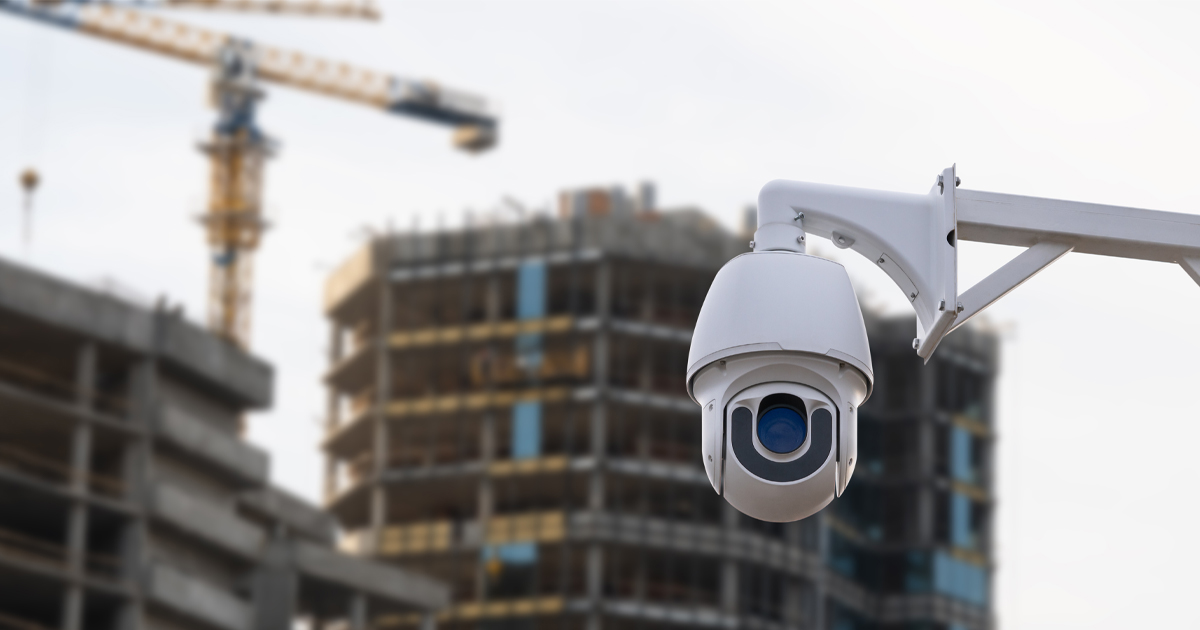
Construction sites are among the hardest properties to secure in any city, and Perth is no exception. You’re protecting a site that is, by definition, temporary. The perimeter changes as the build progresses. Access points multiply. Dozens — sometimes hundreds — of different subcontractors and workers cycle through. There’s no permanent power until mid-build. And the materials and equipment left on site overnight are worth serious money.
Builders and site managers across WA consistently underestimate the theft risk until it happens to them. A single overnight theft of copper wiring, power tools, or plant equipment can set a project back by weeks and cost tens of thousands in losses and delay claims.
Having set up security for construction sites ranging from single-dwelling builds to multi-storey commercial developments across Perth, here’s what actually works.
The most effective construction site security in Perth combines a temporary solar-powered CCTV system with monitored alarm sensors, perimeter lighting, and access control at the site gate. Battery or solar-powered wireless cameras are standard given the lack of permanent power. Sites with visible cameras and monitored alarms experience significantly fewer theft incidents than those relying on fencing and locks alone. |
Why Construction Sites Are High-Value Theft Targets
It’s worth understanding what makes sites vulnerable before designing a solution around it:
High-value portable assets: Power tools, generators, copper pipe, electrical cable, aluminium scaffolding, and plant hire equipment are all easy to move and easy to sell. A van-load of tools from an unsecured Perth site can represent $15,000–$50,000 in losses.
Transient workforce: With dozens of different trades cycling through, it’s genuinely difficult to know who should and shouldn’t be on site at any given time. Offenders sometimes blend in — arriving in a tradesman’s van in the early morning — and load up before anyone questions them.
Poor perimeter security: Construction hoarding and temporary fencing are deterrents, not barriers. Standard temporary fencing panels are taken apart in minutes. Hoardings can be lifted, cut through, or bypassed via adjacent properties.
No permanent power: Until the main switchboard is live, there’s no easy way to run hardwired cameras or sensors — which means many sites default to ‘nothing’ rather than investing in temporary solutions.
Night-time window: The highest-risk period is between about 10pm and 5am. Perth has a significant professional theft network that operates in this window, specifically targeting construction sites.
The Core Components of Effective Construction Site Security
1. Solar or Battery-Powered CCTV Cameras
Since permanent power isn’t available until mid to late build, solar-powered CCTV cameras have become the standard for construction sites in Perth. A decent solar CCTV setup consists of a camera, a battery bank, and a small solar panel — all mounted on a single mast or trailer unit that can be repositioned as the build progresses.
What to look for in a construction site camera:
- Minimum 4MP (ideally 8MP/4K) for identification-quality images
- Night vision with infrared or white-light LED — infrared alone often produces footage that’s too grainy to identify faces at distance
- 4G connectivity for remote viewing and cloud backup — don’t rely on site Wi-Fi that may not exist or may be unreliable
- Motion-triggered recording with app notifications so you know the moment something moves on site
- Tamper-proof mounting — a camera that can be stolen in thirty seconds is not a deterrent
Redeployable camera masts (sometimes called ‘temporary security towers’) can be repositioned every few weeks as the build progresses and the risk profile of different areas changes. This is much more cost-effective than permanent installations for construction applications.
2. Monitored Alarm Sensors
Cameras catch and document — alarms respond. For a construction site, PIR (passive infrared) motion sensors placed at key entry points and around high-value equipment stores can be connected to a battery-powered alarm panel that communicates via 4G to a monitoring centre.
When a sensor triggers, the monitoring centre receives the alert and can either push a live camera view to verify (if cameras are integrated), call the nominated site contact, or dispatch a mobile patrol response. This active response capability is what separates monitored security from a simple camera recording that nobody watches until morning.
For Perth sites, Grade A1 monitored alarm response through a licensed monitoring centre is worth the additional monthly cost — particularly during the structural phase when the most valuable materials and plant are on site overnight.
3. Perimeter Lighting
This is the most underrated element of construction site security. Most site theft happens in the dark. High-intensity LED lights triggered by motion at the perimeter don’t just illuminate — they actively deter. Offenders case sites before hitting them. A site that lights up brightly at every approach is a significantly less attractive target than one that stays dark.
Solar-powered LED floodlights are now powerful and affordable enough to provide meaningful perimeter coverage without permanent power. Position them:
- At the main site gate and any secondary access points
- Along the longest unobstructed hoarding runs
- Around the plant compound and tool storage areas
- At stairwells or lift shafts in multi-storey builds — these are common after-hours access routes
4. Access Control at the Site Gate
For larger Perth construction sites — those with a designated gatehouse or compound — electronic access control at the main entry adds an important layer. Options range from simple PIN pads on gate locks to full RFID card reader systems that log every entry and exit.
The benefit isn’t just keeping people out — it’s knowing who is on site at any given time. This matters for emergency evacuation accountability, WorkSafe compliance, and investigating theft where the pool of suspects is ‘anyone with site access’.
For smaller residential sites without a formal gatehouse, a heavy-duty padlock and hasp system with a master key system for subcontractors is the practical minimum. Key control matters — a site with forty spare keys floating around various trade vans is not a secured site.
5. Plant and Equipment Marking
Not strictly an electronic security measure, but highly effective: asset marking with forensic UV paint, GPS trackers fitted to high-value plant, and registered serial number logging with PCPP (Plant, Commodity and Property Protection) databases makes stolen equipment dramatically harder to sell and easier to recover.
GPS trackers fitted to generators, compressors, and scaffolding components have enabled WA Police to recover significant amounts of stolen construction equipment from Perth and regional WA sites. The tracker cost is trivial compared to the replacement value.
Specific Risks at Different Build Stages
Pre-slab and early earthworks stage
Risk level: Moderate. Main targets are earthmoving plant hire equipment and any stored materials. Key measure: perimeter lighting, camera at site entry, chain and padlock equipment to fixed objects.
Structural/framing stage
Risk level: High. The highest concentration of valuable materials (steel, copper, aluminium, timber) combined with an incomplete structure that’s easy to enter. Key measures: full camera coverage, monitored alarms, tool storage container that is bolted or secured to a concrete pad.
Fit-out stage
Risk level: Very high. Appliances, electrical components, plumbing fittings, joinery, and construction plant are all on site in quantity. Many fit-out materials are more portable and valuable than structural materials. The site is also busier with more trades — the ‘blending in’ risk is highest. Key measures: access control, maximum camera coverage including internal areas where valuables are stored.
Practical completion stage
Risk level: Moderate-high. Finished appliances, fixtures, and sometimes keys/access cards for the completed asset are present. The site hoarding may have been removed, creating a more open perimeter. Transition to permanent security system should happen at this stage.
Insurance Implications for Perth Construction Sites
Most construction insurance policies (contract works insurance and public liability) have security requirements that the site principal is responsible for meeting. Failing to maintain adequate perimeter security, lighting, and lock-up procedures can void a theft claim or lead to a significant excess being applied.
Before taking out or renewing a construction insurance policy, ask your broker specifically what security measures are required. Common conditions include:
- All plant to be immobilised and secured when not in use
- Perimeter fencing to be maintained in a condition that prevents easy access
- Alarm or monitoring system operational for sites above a certain value
- CCTV as a condition for sites in certain postcode areas deemed high-risk
Perth’s northern suburbs and some outer metropolitan fringe areas are flagged as higher-risk construction zones by some insurers. If you’re building in these areas, security requirements in your policy may be more stringent.
Frequently Asked Questions
Can I move the cameras as the build progresses?
Yes — and for construction sites, you should plan to. A redeployable camera mast or trailer-mounted system is specifically designed for this. Access 1 can supply systems where cameras, solar panels, and the battery bank are mounted as a single unit on a moveable base — it takes an hour to relocate with a forklift or site bobcat. Plan camera placement reviews at each major build milestone.
Do I need a security licence to install cameras on my own site?
Under the Security and Related Activities (Control) Act 1996 (WA), commercial security installation must be carried out by a licensed security installer. Site owners can install consumer-grade cameras without a licence for personal use, but for commercial-grade systems — particularly those connected to monitoring centres — use a licensed installer. Insurance requirements often specify professionally installed systems.
What’s the most stolen item from Perth construction sites right now?
Copper wiring and cable consistently top the list — the scrap metal value is high and the items are easy to move. After that: cordless power tool sets (particularly Milwaukee, DeWalt, and Makita), portable generators, and diesel-powered plant equipment. Catalytic converter theft from plant vehicles has also increased significantly in recent years. Any asset with easy secondary-market value is a target.
Access 1 Security Systems supplies and installs temporary construction site security solutions across Perth and regional WA — including solar-powered CCTV towers, monitored wireless alarms, and redeployable systems that move with your build. Call 1300 855 781 for a site-specific quote. |