
Are you an Australian Business Owner who is disturbed by the trends in violent crime and wants to ensure their business, staff and family have all the protection they need?



CCTV Installation in Kewdale: What Local Homes and Businesses Actually Need to Know
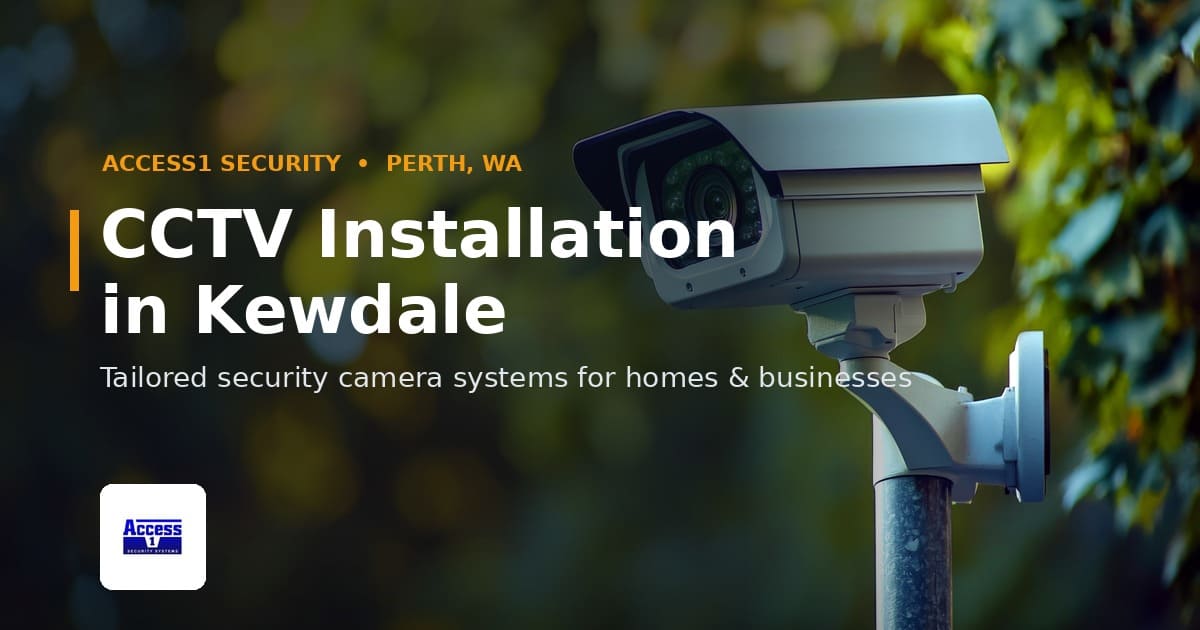
If you’ve driven through Kewdale lately, you’ll have noticed it’s not your typical quiet Perth suburb. Wedged between the airport, Kewdale’s massive freight and logistics precinct, and a mix of established homes, it’s one of those areas where security concerns look a bit different depending on who you’re talking to. A warehouse manager on Belmont Avenue has very different needs to a family on a quiet residential street near Wright Street Reserve. Yet both end up asking the same question eventually: do I actually need CCTV, and if so, what kind?
Having worked with property owners across Kewdale and the wider Perth eastern corridor, we’ve noticed a pattern. People tend to put off CCTV installation until after something happens — a break-in, a theft from a yard, stock going missing from a warehouse. It’s understandable. Security cameras aren’t exactly top of mind until you need them. But Kewdale’s unique mix of industrial, commercial and residential zones means it’s worth thinking about beforehand, not after.
Why Kewdale Is a Bit of a Special Case
A lot of security advice online is generic — written for “anywhere in Australia” rather than a specific suburb. Kewdale doesn’t quite fit that mould.
For one, it’s home to a huge concentration of warehouses, transport depots and light industrial businesses, thanks to its location near Perth Airport and major arterial roads like Abernethy Road and Kewdale Road. That brings genuine advantages for logistics companies, but it also means higher foot and vehicle traffic through the area at all hours, including overnight when most businesses are unstaffed.
Then there’s the residential pocket, which is older and established, with a lot of houses backing onto laneways or with side access that isn’t always well lit. Combine that with the suburb’s proximity to major roads (which, frankly, makes for an easy quick getaway if someone’s up to no good) and you can see why local demand for CCTV has grown over the past few years.
What Kind of System Actually Makes Sense
This is where a lot of guides online fall short — they’ll tell you “get CCTV” without addressing that a two-bedroom home and a 2,000 square metre warehouse have almost nothing in common in terms of what they need.
For homes, most Kewdale properties do well with a modest setup: cameras covering the driveway, front entry, and any side or rear access points. Four cameras is usually the sweet spot for a standard block — enough to remove blind spots without paying for coverage you don’t need. Battery or wired doesn’t matter as much as positioning; a camera pointed at the wrong angle is basically decorative.
For commercial and industrial sites, it’s a different conversation entirely. You’re usually looking at perimeter coverage, loading dock monitoring, internal stock areas, and often integration with access control or alarm systems so everything talks to each other. Warehouses around the Kewdale industrial estate also tend to benefit from number plate recognition cameras at entry points, given how much of the activity involves trucks and deliveries coming and going.
There’s also the question of storage and monitoring. A camera that records footage nobody ever looks at until three weeks after an incident (by which point it’s been overwritten) isn’t much use. Cloud storage with a sensible retention period, or a local NVR with enough capacity, matters just as much as the camera hardware itself.
Council Rules and Practical Considerations
One thing that catches people off guard: if you’re a business owner considering cameras that capture footage of a public footpath or neighbouring property, there are privacy obligations worth understanding before installation, not after. It’s not usually a dealbreaker, but positioning cameras thoughtfully avoids awkward conversations with neighbours or council down the track. A good installer will flag this during the initial site assessment rather than leaving you to figure it out.
Weather is also worth a mention, even though it feels like a minor point. Perth’s summers are harsh on outdoor electronics, and a camera rated for the wrong conditions will degrade faster than expected, especially anything mounted facing west where it cops full afternoon sun. It’s a small detail, but it’s the kind of thing that separates a system that lasts eight years from one that needs replacing in eighteen months.
The Installation Process, Realistically
Most people assume CCTV installation is a same-day job, and for a straightforward residential setup, that’s often true. A typical home install — say four to six cameras — can usually be done in a single visit, with cabling run discreetly and the system configured to your phone before the installer leaves.
Commercial jobs take longer, unsurprisingly. Larger sites need a proper site assessment first: walking the property, identifying blind spots, checking existing cabling infrastructure (if any), and working out camera placement that actually covers the areas that matter rather than just ticking boxes. Rushing this stage is where a lot of security systems go wrong — you end up with cameras covering redundant angles while an actual entry point sits unmonitored.
What to Ask Before You Commit
If you’re getting quotes for CCTV installation in Kewdale, a few questions tend to separate a decent installer from one who’s just trying to sell hardware:
- Will the system be tailored to my specific property, or is this a standard package?
- What happens to footage storage, and for how long is it retained?
- Is the system remotely accessible, and how secure is that access?
- What’s covered under warranty, and is local support available if something goes wrong?
- Can the system integrate with existing alarms or access control down the track?
A local installer who actually knows the area — the way traffic moves through Kewdale, common blind spots on older homes, what industrial sites in the precinct typically need — tends to give more useful answers to these than a call centre reading from a script.
FILL YOUR DETAILS HERE For more Information
Getting It Right the First Time
CCTV isn’t just about having cameras up; it’s about having the right cameras in the right places, recording in a way that’s actually useful if you ever need to look back at footage. That’s really the whole point — a system that looks impressive but has poor coverage or unreliable storage isn’t doing its job, no matter how many cameras are on the wall.
If you’re weighing up CCTV installation for a home or business in Kewdale, it’s worth getting a proper site assessment rather than guessing at what you need. Access1 Security works across Kewdale and the surrounding Perth suburbs, tailoring systems to the property rather than pushing a one-size-fits-all package. Whether it’s a residential setup or a larger commercial site near the industrial estate, getting the groundwork right from the start saves a lot of hassle later.