
Are you an Australian Business Owner who is disturbed by the trends in violent crime and wants to ensure their business, staff and family have all the protection they need?



Security Alarm Systems in Melbourne: What Every Business Owner Needs to Know Before It’s Too Late
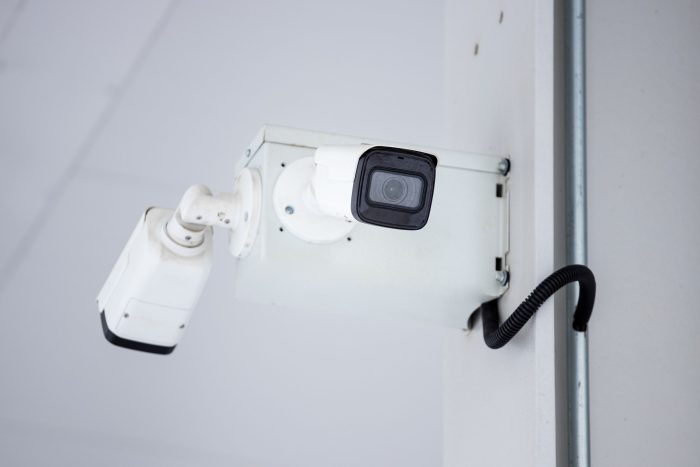
There’s a conversation we have almost every week — usually over the phone, sometimes in person — that never gets easier to hear. A business owner calls us, voice somewhere between flat and furious, because they’ve just been broken into. Stock gone. Equipment smashed. Staff shaken up. And almost every time, the first thing they say is: “I knew I should have sorted the alarm earlier.”
If you run a business in Melbourne — whether that’s a café in Fitzroy, a warehouse in Dandenong, a retail strip in South Yarra, or an office complex in the CBD — this guide is written for you. We’re going to walk through what modern security alarm systems actually do, what separates a cheap install from a genuinely protective one, and what questions you should be asking before you sign any quote.
This isn’t a sales pitch. It’s the kind of straight-talking information we wish more business owners had access to before something went wrong.
Why Melbourne Businesses Are Under More Pressure Than Ever
Victoria Police crime statistics have consistently shown that commercial burglary remains one of the most reported property crimes across Greater Melbourne. The problem isn’t just opportunistic break-ins after hours — it’s also internal theft, after-hours loitering, ram-raids on shopfronts, and increasingly sophisticated attempts to bypass outdated alarm systems.
What’s changed in the last five years is the pattern. Criminals are getting better at identifying which businesses have old or poorly maintained systems. A keypad alarm from 2010 with a single siren and no monitoring contract? That’s essentially a deterrent sticker on the window, not a real layer of protection.
The good news is that the technology has improved enormously too. And for Melbourne business owners who invest in a properly designed alarm system — one that’s tailored to their site, not just pulled off a shelf — the difference in protection is significant.
What a Modern Security Alarm System Actually Includes
When people hear “security alarm,” most still picture a siren that goes off when someone opens a door. That picture is about 20 years out of date. A well-designed system today is a layered ecosystem of detection, communication, and response — and the quality of each layer matters.
Detection Devices
The front line of any alarm system. These typically include:
- Passive Infrared (PIR) Motion Detectors — detect body heat and movement across defined zones. Quality PIRs distinguish between humans and animals, which dramatically reduces false alarms.
- Door and Window Reed Switches — trigger when a point of entry is opened unexpectedly. Essential for after-hours protection.
- Dual-Technology Detectors — combine PIR with microwave sensing for very low false alarm rates in challenging environments like warehouses or spaces with fluctuating temperatures.
- Glass Break Detectors — acoustic sensors that trigger on the specific frequency of breaking glass. Particularly important for shopfronts.
The Control Panel
This is the brain of the operation. The panel processes input from every detector and makes decisions: is this a real event? Who needs to be notified? Which zones are armed? Better panels support multiple zones, programmable access levels, and remote configuration — and critically, they log everything. If you ever need to review what happened during an incident, a good panel gives you a clean audit trail.
We see a lot of panels in Melbourne commercial premises that haven’t been serviced in years. Batteries degraded, firmware never updated, communication paths that stopped working silently. Business owners think they’re protected when they’re not.
Communication Pathways
How does your alarm get word out when it triggers? Old systems relied on a single phone line — easy to cut, easy to bypass. Robust systems today use multiple communication paths simultaneously:
- 4G/LTE cellular communication as the primary path (no phone line to cut)
- Broadband IP as a secondary path
- Traditional PSTN as a tertiary fallback where still available
If a professional monitoring centre isn’t receiving a regular “heartbeat” signal from your system, they know something’s wrong — even before anyone breaks in. That’s a powerful capability that simply didn’t exist in older systems.
Alarm Monitoring: The Part Most Business Owners Get Wrong
Here’s something we see constantly: a business invests in a reasonably good alarm system, then skimps on the monitoring. They set it up to call a mobile number — their own mobile, or maybe their manager’s — and call it done.
The problem? What happens when you’re asleep, your phone is on silent, or you’re at your daughter’s school concert? What happens if you miss the call? What happens if the alarm triggers while you’re already in an emergency? Self-monitoring has hard limits, and experienced criminals know exactly when to exploit them.
Professional 24/7 alarm monitoring changes the equation entirely. A staffed monitoring centre receives your alarm signal, verifies it (usually by calling site contacts in sequence or through integrated video verification), and dispatches a response — whether that’s your keyholder, a security guard, or police — within minutes. Not whenever someone happens to see a missed call.
For Melbourne businesses in particular, where response times vary across suburbs, having a monitoring centre that already knows your site, your contacts, and your protocols is genuinely valuable. It’s the difference between a deterrent and an actual response capability.
The Ajax Security Advantage — What It Means for Melbourne Sites
Over the years, we’ve worked with a lot of alarm platforms. And increasingly, for commercial clients who want reliability without complexity, Ajax Security systems have become our go-to recommendation. Here’s why it matters for a Melbourne context specifically.
Ajax uses a proprietary wireless protocol called Jeweller — not Wi-Fi, not standard Zigbee — which gives it several practical advantages. The devices communicate on an encrypted channel with anti-jamming technology built in. Attempting to interfere with the signal is detected and reported, rather than simply disrupting the system silently.
For businesses in older Melbourne buildings — converted warehouses in Collingwood, heritage office buildings in the CBD, sprawling retail complexes — wireless installation also solves the very real problem of cabling through walls and ceilings where running wire is either expensive or structurally impossible.
The Ajax app integration also means that owners and managers can arm or disarm remotely, receive real-time push notifications, and review event logs — all from a smartphone. For businesses with multiple locations across Melbourne, that centralised visibility is genuinely useful for day-to-day management.
Integrating Your Alarm System With CCTV and Access Control
A lot of Melbourne businesses treat security as three separate purchases: an alarm, some cameras, maybe an access control card reader on the front door. They buy them at different times from different providers, and end up with three systems that don’t talk to each other.
This is a mistake, and it costs more in the long run — both in dollars and in gaps.
When your alarm system integrates with your CCTV, an alarm trigger automatically pulls up camera footage from the relevant zone in the monitoring centre. Guards and police aren’t responding blind — they know what they’re walking into. When it integrates with access control, you can set rules like: “If the alarm is armed, no access card will open the back door,” or “If someone badges in during after-hours, send a camera snapshot to the manager’s phone.”
These kinds of integrations aren’t science fiction. They’re standard in a well-designed security system, and they make the whole system smarter and more useful than the sum of its parts.
5 Questions to Ask Any Security Alarm Installer Before You Commit
We’ve seen what happens when businesses rush this decision. They get a quote, the price looks reasonable, and they sign. Six months later, they’re dealing with constant false alarms, a panel that can’t be remotely managed, and a monitoring contract that’s hard to exit.
Before you commit to any installer, get answers to these five questions:
- Are you licensed to install and maintain security systems in Victoria? — Licensing requirements exist for a reason. An unlicensed installer isn’t just a legal risk — they’re often cutting corners on equipment and practices too.
- Do you conduct a site assessment before quoting? — A reputable installer walks your site before they quote. They assess entry points, lighting, risk areas, and building-specific challenges. Anyone quoting blind is guessing.
- What happens if my alarm triggers at 3am on a Sunday? — Find out exactly what the monitoring and response chain looks like. Who gets called, in what order, how quickly? What are the escalation steps?
- What are the ongoing maintenance commitments? — Alarm systems need regular servicing. Detectors accumulate dust. Batteries degrade. If an installer doesn’t mention ongoing service, ask why.
- Can you show me examples of similar businesses you’ve installed for? — References and case studies matter. Experience with a similar site type (retail, hospitality, warehouse, office) is more relevant than general years in business.
Real World Scenarios: How a Good Alarm System Performs
Theory is one thing. Here’s what properly designed alarm systems actually do in practice — the kinds of outcomes we’ve seen for businesses across Australia.
Scenario 1: The After-Hours Break-In Attempt
A retail business in a Melbourne shopping strip. Intruder forces entry through a rear service door at 2:15am. The reed switch triggers instantly. The panel signals the monitoring centre via 4G. The monitoring centre attempts to call the site keyholder — no answer. They call the backup contact — same. Within four minutes, a mobile security patrol is dispatched. The intruder is still on site. Police are called simultaneously. No stock is taken. The business owner is called at 2:23am with a full account of what happened.
Scenario 2: The Internal Theft Problem
A hospitality business notices stock discrepancies on Monday mornings. Integration between access control logs and alarm arming records shows a pattern: one staff member’s card is used to re-enter after close on Friday nights. The alarm is being disarmed. Evidence captured. Issue resolved. This is only possible because the alarm system, access control, and audit logs are part of one integrated platform.
Scenario 3: The False Alarm Problem Solved
A business upgrading from an old system was plagued by false alarms — averaging two to three per month. The installer was using low-grade detectors that triggered on air conditioning drafts and insects. After replacement with quality dual-technology detectors and proper zoning, false alarms dropped to zero over the following six months. Police were no longer attending unnecessary callouts. The monitoring centre wasn’t crying wolf. The whole system became trustworthy.
What Does a Security Alarm System Cost in Melbourne?
We get this question a lot, and we’ll give you an honest answer rather than a vague “it depends.” It does depend — but here’s what shapes the cost so you can calibrate expectations.
Installation cost factors:
- Site size and number of zones — a small café might need 4-6 detection zones; a warehouse could need 20+
- Number and type of detection devices — motion detectors, door/window sensors, glass break detectors
- Control panel capacity and grade — commercial-grade panels cost more but perform and report better
- Wired vs wireless installation — wireless (like Ajax) can reduce labour costs significantly in hard-to-cable buildings
- Integration requirements — CCTV, access control, and intercoms all add to scope but also add value
For a small to medium commercial premises in Melbourne, a professionally installed system with monitoring typically runs from a few thousand dollars for a basic setup to $8,000–$15,000+ for a comprehensive installation with multiple detection layers and integrated CCTV. Monitoring is generally charged monthly — industry range is roughly $30–$80/month depending on response levels.
One thing we always say: the cost of a proper system is almost always less than the cost of a single significant break-in — when you factor in stock loss, equipment damage, business interruption, and the very real psychological toll on staff.
Maintaining Your Security Alarm System — The Part Everyone Ignores
Even the best alarm system becomes unreliable without regular maintenance. This is one of the most common issues we see when businesses call us to upgrade or take over a system installed by someone else.
A proper service schedule should include:
- Cleaning and testing all detection devices — detectors accumulate dust, insects, and debris that affect sensitivity
- Battery testing and replacement — backup batteries in panels and wireless devices degrade over time
- Firmware and software updates — many modern panels receive security updates; not applying them is a vulnerability
- Communication path testing — confirming that all signal paths (4G, IP, PSTN) are active and reporting correctly
- Zone-by-zone walk test — physically triggering each detector to confirm it’s functioning as intended
- Review of keyholder and contact lists — outdated contacts mean delays in response
Annual servicing is the minimum. For high-risk businesses — hospitality venues, late-night retail, storage facilities with high-value contents — twice-yearly servicing is a worthwhile investment.
How to Choose the Right Security Partner for Your Melbourne Business
The security industry, unfortunately, has its share of operators who are more interested in locking clients into long contracts than in actually protecting their businesses. Here’s what a trustworthy security partner looks like.
They lead with assessment, not product.
A good security partner visits your site before they propose anything. They ask about your risks, your operations, your staff patterns, your after-hours exposure. They design a system around your specific vulnerabilities — not a generic package.
They’re transparent about equipment.
You should know exactly what panel, detectors, and communicators are going into your building. If a provider is vague about brands or won’t tell you what equipment they’re using, ask harder.
They have verifiable references.
Testimonials from recognisable businesses carry real weight. When a security company has protected well-known clients — national brands, large organisations, regulated businesses — that’s evidence of a level of competence and reliability that matters.
Their monitoring is grade-appropriate.
Ask specifically about the monitoring centre: is it staffed 24/7? Is it AS2201.2 graded? What’s the process if the system goes offline? These details matter enormously at 3am.
The Bottom Line
Security alarm systems for Melbourne businesses aren’t a luxury or a box-ticking exercise. They’re a practical, demonstrably effective tool for protecting what you’ve built — your stock, your equipment, your people, and your reputation.
The businesses we work with that have the best outcomes share a few things: they invested in properly designed systems, they maintained them, they took monitoring seriously, and they treated their security provider as a long-term partner rather than a one-time contractor.
If you’re currently running an older system, haven’t had your alarm serviced in over a year, or are setting up a new Melbourne site and want to do it properly from the start — we’d encourage you to get a professional site assessment. Not from us necessarily, but from someone who’s willing to spend time understanding your business before they propose a solution.
That said — if you want to talk to a team that has done this across hundreds of Australian commercial sites, and whose work has been recognised at a national level, we’re happy to have that conversation.
Call Access 1 Security Systems: 1300 855 781 | Visit: www.access1security.com.au