
Are you an Australian Business Owner who is disturbed by the trends in violent crime and wants to ensure their business, staff and family have all the protection they need?



Security Systems for Franchise & Multi-Site Retail Businesses in Perth
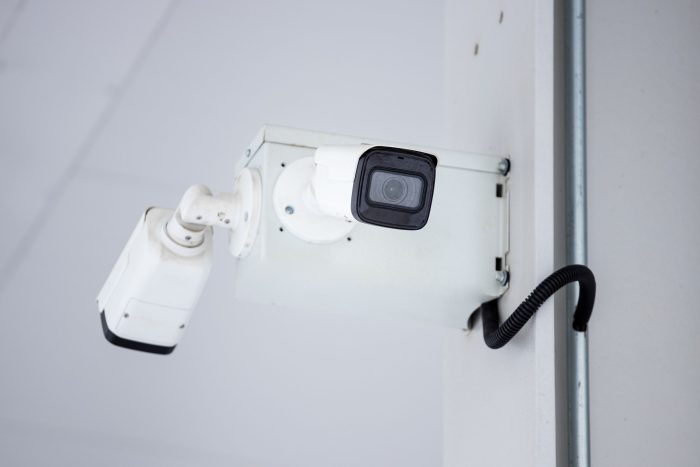
A single-site retailer and a franchise operator ask the security industry two completely different questions. The single-site owner asks, “how do I stop people breaking in?” The franchisee — or the area manager overseeing six stores — asks, “how do I know what’s happening across all of them, right now, without driving to each one?”
That second question is the one we get asked most by the franchise groups we work with, and it’s the one most generic security advice doesn’t actually answer.
We’ve Been Doing This With Real Franchise Networks, Not in Theory
Access 1 has supplied and monitored CCTV and alarm systems for a number of franchisees within the Subway network across Western Australia and South Australia, and we’ve done similar work with Oporto, Red Rooster and Zambrero locations. National Storage — a multi-site operator in its own right — is also a long-term client. This isn’t a hypothetical service line for us; it’s a meaningful share of who we install for.
What that experience has taught us is that franchise and multi-site security fails in fairly predictable ways when it’s set up like a series of one-off single-store jobs instead of a network.
The Problem With Treating Each Store as a Separate Install
When every store in a franchise group buys its own security system — sometimes because a new franchisee inherits whatever the previous owner had, sometimes because head office leaves it entirely up to the local operator — you end up with a patchwork. Different camera brands. Different alarm monitoring providers. Different login credentials for every site. An area manager trying to check on three stores after a late-night alert ends up juggling three different apps, three different passwords, and three different quality levels of footage.
It also means the franchise brand has no consistent standard to point to. If something goes wrong — a break-in, a workers’ comp claim, a dispute over till reconciliation — the quality of the evidence depends entirely on which system that particular franchisee happened to buy.
What Centralised, Standardised Security Actually Looks Like
The alternative is treating the network as one system with multiple locations, not multiple unrelated systems:
One standard for every site. Choosing a defined camera and alarm specification that gets rolled out to every store — new build or existing — means an area manager, or head office, always knows what they’re looking at. Camera placement over the till, the back door, the delivery entrance and the safe becomes a standard, not a guess.
Centralised remote viewing. Rather than logging into a separate system per store, a single dashboard lets an owner or area manager check live or recorded footage from every location from one login — useful for spot-checking closing procedures, verifying a stock delivery, or reviewing an incident without needing to physically visit.
One alarm monitoring relationship, not several. Consistent monitoring, delivered from the one 24/7 back-to-base response centre across every site, means alerts are handled the same way regardless of which store triggers them, and there’s a single point of contact when something needs following up.
Staff theft and shrinkage patterns become visible. This is one of the more practical reasons franchise groups come to us. A single store’s till discrepancies can look like noise. Once you can see camera and access data consistently across five or six sites, patterns — a particular shift, a particular register, a particular time window — become much easier to spot and act on.
What to Ask Before You Roll Out a Network-Wide System
If you’re an area manager or franchise owner weighing this up, a few practical questions are worth raising with any installer:
- Can the system scale as we add or lose locations, without re-platforming everything?
- Is monitoring handled from a local response centre, or does an alert go offshore first?
- Can access permissions be tiered — so a store manager sees their site, and an area manager sees all of them?
- What happens to footage and access logs if a franchisee sells the store or leaves the network?
Built for Networks, Not Just Single Stores
Access 1 has worked inside real franchise systems — including QSR groups managing multiple Perth and interstate locations — long enough to know where the gaps usually are. If you’re standardising security across an existing network, or setting up a new site within one, our Fast Food Security Systems and Alarm Monitoring Solutions pages cover the specifics, or you can get in touch directly to talk through what a network-wide rollout would look like for your group.