
Are you an Australian Business Owner who is disturbed by the trends in violent crime and wants to ensure their business, staff and family have all the protection they need?



Self-Storage Facility Security: A Buyer’s Checklist for WA Operators
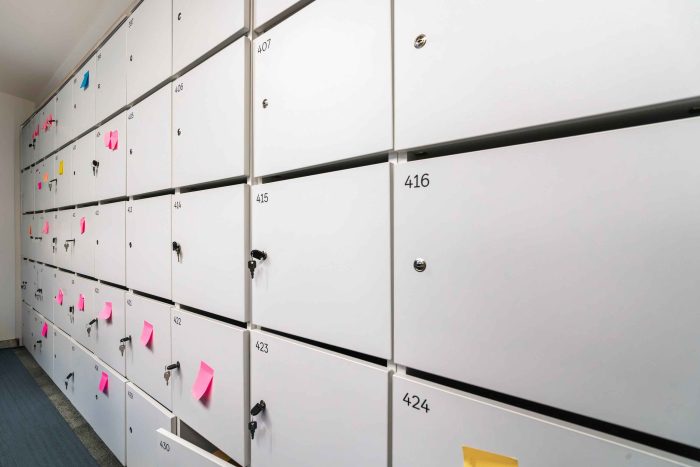
Self-storage sits in an odd spot for security planning. It’s not a retail shop with a till to protect during trading hours, and it’s not an office with a defined workforce coming and going. It’s a site that has to stay secure 24 hours a day, with hundreds of individual customers who all need legitimate access at different times, often with nobody on-site to supervise it in person.
That combination — constant access, minimal supervision, high-value contents behind a lot of individual doors — is what makes storage security a genuinely different brief to most commercial security work. We supply and maintain systems for National Storage facilities, and the checklist below is built from what actually gets tested at that kind of site, not a generic “here’s what CCTV does” list.
1. Gate and Perimeter Access Control
The front gate is doing more work at a storage facility than almost anywhere else — it’s simultaneously your main deterrent and your customer’s first interaction with the site.
- Does the access system log every entry and exit with a timestamp, tied to an individual customer code or card — not a shared PIN?
- Can you restrict access hours per customer (e.g. no access between midnight and 6am) if your facility operates on defined hours?
- Is there a manual override for staff and emergency services that’s still logged, not a silent bypass?
- How is a lost card or forgotten code handled — can it be deactivated instantly, or does it require a technician visit?
A shared gate code that never changes is the single most common weak point we find when we’re asked to review an existing facility’s setup. It defeats the entire purpose of individual access logging.
2. Perimeter and Corridor CCTV Coverage
Camera coverage at a storage facility needs to do two jobs: deter opportunistic access, and provide usable footage if something does happen.
- Is the boundary fence line covered, not just the gate?
- Are internal corridors and aisles covered, particularly at the ends and blind corners created by container or unit rows?
- Is coverage continuous, or are there dead zones between camera fields of view that someone familiar with the site could exploit?
- Is footage retention long enough to cover a customer noticing an issue on a return visit weeks later, not just a few days?
Ask any prospective supplier to walk the site with you and mark up where cameras would actually go, rather than just quoting a number of cameras. Coverage depends entirely on placement, not camera count.
3. Individual Unit Alarms
This is the feature that differentiates a properly specified storage facility from one that’s just relying on gate access and cameras.
- Are individual units fitted with door-open or motion sensors, or only the perimeter?
- Does a unit alarm trigger a monitored response, or just a local siren?
- Can sensitivity be tuned so legitimate customer access during business hours doesn’t generate constant false triggers?
Unit-level alarms matter because gate access control only tells you someone entered the facility with a valid code — it doesn’t tell you whether they went to their own unit or someone else’s.
4. After-Hours Monitoring
Nobody is on-site overnight at most storage facilities, which means the monitoring relationship is doing the job a staff member would do elsewhere.
- Is monitoring handled by a local, 24/7 back-to-base response centre, or an overseas call centre reading from a script?
- What’s the actual response process when an alarm triggers — who gets called first, and in what order?
- How are false alarms handled, and is there a process for tuning the system down over time as you learn the site’s normal patterns?
5. Integration Between Systems
The point where a lot of storage security setups fall down is when access control, CCTV and alarm monitoring are three separate systems from three different suppliers that don’t talk to each other. If a unit alarm triggers, can staff or monitoring pull up the relevant camera feed and the access log for that time window in one place — or does someone have to manually cross-reference three separate logins?
Comparing Suppliers? Ask to See a Site That’s Already Live
Any supplier can describe a system on paper. For a facility that runs 24/7 with minimal on-site staff, ask to see — or at least discuss in detail — a comparable site they’ve actually installed and are still monitoring, not just a spec sheet.
Access 1 has supplied and maintained security for storage operators including National Storage locations. If you’re comparing suppliers for a new facility or reviewing an existing setup, our Storage Facility Security Systems page has more detail, or you can get in touch to arrange a site walk-through and a checklist review against your specific layout.