
Are you an Australian Business Owner who is disturbed by the trends in violent crime and wants to ensure their business, staff and family have all the protection they need?



Wired vs Wireless Security Camera Systems — Which Is Right for Your Perth Business?
Introduction
It comes up in almost every quote I do for a Perth business. The client walks me through the premises, I start asking questions about cabling, and they say something like: ‘Can’t we just go wireless? I don’t want holes in the walls.’
It’s a completely reasonable thing to want. But the honest answer is — it depends on what ‘wireless’ actually means for your specific building, your internet setup, and what you need the cameras to do. There are situations where wireless is the smarter choice. And there are situations where cutting corners on cabling costs you more in the long run.
Here’s a straight-talking breakdown from someone who’s installed both systems across hundreds of Perth commercial properties.
What ‘Wired’ and ‘Wireless’ Actually Mean
Wired CCTV Systems
A wired system runs physical cables — typically Cat5/Cat6 ethernet cable or coax — from each camera back to a central recorder (an NVR for IP cameras, or a DVR for older analogue systems). Power is delivered to each camera either via the same cable (PoE — Power over Ethernet) or through a separate power run.
Everything about a wired system is physical and permanent. Once it’s in, it just works. No Wi-Fi interference. No dependency on your router. No batteries. No dropouts when someone runs the microwave.
Wireless CCTV Systems
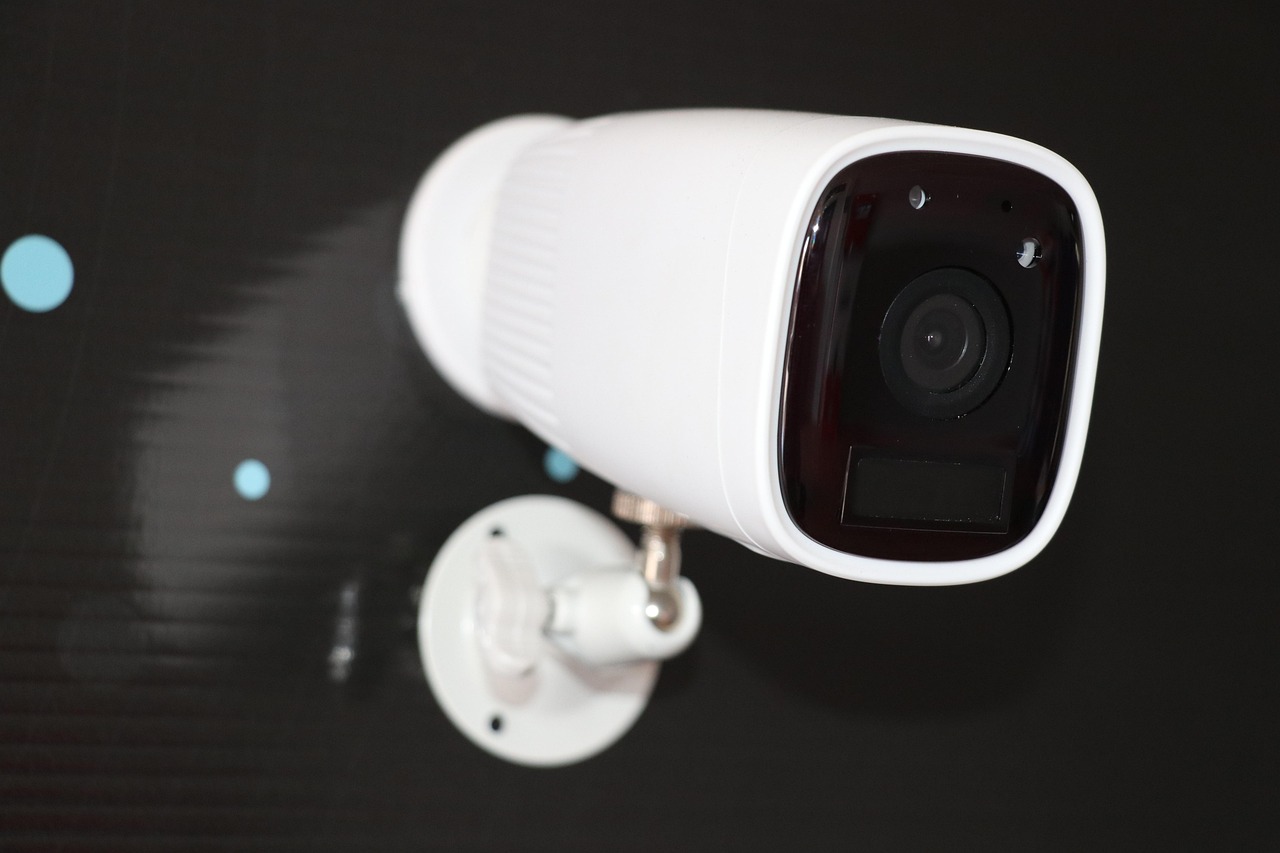
True commercial wireless cameras connect to your local Wi-Fi network and transmit footage over that connection. Some systems use a dedicated wireless mesh — a private radio frequency between cameras and a hub — which is more reliable than standard Wi-Fi but still requires a power source at each camera.
It’s worth clarifying: ‘wireless’ in CCTV usually means wireless data transmission. Most wireless cameras still need a power cable or battery at the camera end. Fully battery-powered cameras (like some consumer-grade models) are a separate category and come with their own trade-offs.
Wired CCTV systems are more reliable, faster, and better suited for permanent commercial CCTV installations in Perth. Wireless systems offer more flexible placement and easier installation in leased spaces or buildings where running cable is difficult. For most businesses, a hybrid approach — wired where possible, wireless for difficult locations — gives the best of both.
When Wired Makes More Sense
New builds and owner-occupied premises
If you own the building, or it’s a new fit-out where walls are open before plastering, always go wired. Cable runs are easy at this stage, and you’re building infrastructure that will outlast the cameras by decades. The cost difference between wired and wireless is smallest at this point, and the reliability advantage of wired is highest.
High-camera-count installations
Once you’re putting in more than six cameras, wireless network congestion becomes a real consideration. Each camera is streaming high-definition video continuously. That’s a lot of data. On a wired network, each camera has dedicated bandwidth. On a wireless network, they’re competing for spectrum. Beyond about six to eight cameras, most Wi-Fi networks start showing their limits — you’ll see stuttering footage, delayed recording, and cameras that periodically drop off the system.
Industrial and warehouse environments
Warehouses, manufacturing facilities, and industrial sites are notoriously difficult wireless environments. Steel racking, concrete walls, large open spaces, and interference from machinery all degrade Wi-Fi signal significantly. I’ve seen wireless systems that worked perfectly in a showroom demo perform terribly on a real Perth warehouse floor. Wired is the standard for a reason.
High-security requirements
A wired camera is much harder to defeat than a wireless one. Wireless cameras can theoretically be jammed using a signal jammer — a device freely available online. Wired cameras can’t be remotely disabled. For premises storing high-value goods, cash, or sensitive materials, this matters.
When Wireless Makes More Sense
Leased commercial spaces
If you’re renting your premises, running new cabling through walls and ceilings means making good (patching, repainting) when you leave — and sometimes getting landlord approval. A wireless system avoids most of that. Modern wireless commercial cameras are stable enough for most retail and office applications, and you can take the system with you when you move.
Heritage or difficult buildings
Some Perth commercial buildings — older warehouses in Fremantle, heritage shopfronts in Northbridge, double-brick suburban buildings — make cabling genuinely expensive. Running cable through 300mm of double brick costs significantly more in labour than a straightforward installation. In these cases, wireless can be more cost-effective than extensive drilling and conduit work.
Quick deployment or temporary sites
Need cameras up on a construction site that’ll be finished in eight months? Wireless (or battery-powered) makes sense. Running cable infrastructure into a temporary location is wasted investment.
Adding cameras to an existing wired system
This is actually one of the best wireless use cases. You have a wired system covering most of your premises, but there’s a blind spot — a back corner, an external storage area, a loading dock added after the original install. Rather than pulling new cable runs, a single wireless camera that connects to your existing NVR via Wi-Fi can fill that gap cleanly.
The Hybrid Approach — What Most Perth Businesses Actually Use
In practice, a large proportion of commercial security installations Access 1 does in Perth are hybrid systems. The main building areas are wired — reliable, fast, no interference. External cameras, outbuildings, or difficult-access locations are wireless. The cameras connect to the same NVR, use the same app, and appear as one unified system.
This approach is worth discussing with your installer upfront. Rather than asking ‘wired or wireless,’ ask: ‘Given my building, what combination gives me the best coverage, reliability, and value?’
What About Power? The Battery Camera Question
Consumer-brand battery cameras (you know the ones) are fine for a residential back door or letterbox check. For a commercial premises where you need continuous recording, they’re generally not suitable. Battery cameras record on motion only, have limited storage, and require regular recharging — tasks that become genuinely burdensome when you have eight cameras across a busy commercial site.
Some commercial-grade battery cameras now last three to six months between charges and have solar charging options, which makes them viable for specific applications — remote gate cameras, external boundary cameras on large rural properties. But for main commercial coverage, powered cameras (wired or wireless-with-power) are the standard.
Reliability Comparison: The Honest Version
Factor | Wired | Wireless |
Connection stability | Excellent — no interference | Good — depends on Wi-Fi quality |
Image quality consistency | Excellent | Good (degrades with signal) |
Power reliability | Excellent (PoE) | Depends on power source |
Installation complexity | Higher — cable runs needed | Lower — especially in leased spaces |
Tamper resistance | High — hard to disable | Lower — susceptible to jamming |
Scalability | Easy to expand | Network limits above 6–8 cameras |
Cost (labour) | Higher | Lower |
Cost (equipment) | Similar | Similar–slightly higher |
Best for | Permanent, owned premises | Leased, difficult buildings, temporary |
Access 1 Security Systems installs wired, wireless, and hybrid CCTV systems across Perth and regional WA. We assess your specific premises and recommend the right approach — not the easiest one. Call 1300 855 781 or visit access1security.com.au for a free site assessment.